

Galaxy International Convention Center
09:00 - 09:05
- Opening
Keynote
09:05 - 10:00
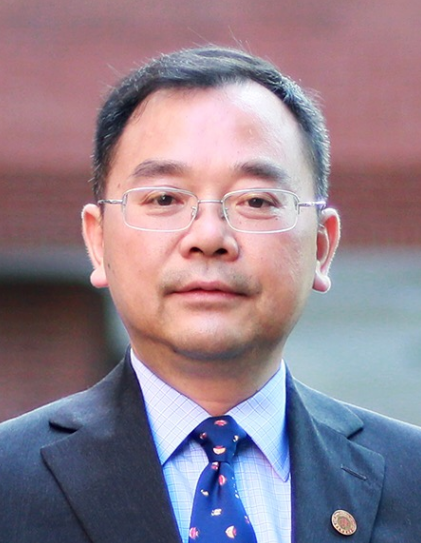
Contemporary artificial intelligence is essentially data intelligence,means automation of intelligence powered by data. Without computers, there would be no internet; without the internet, there would be no big data; and without big data, there would be no current AI. Behind the data intelligence boom is the newer and deeper understanding about data engineering that emerged almost at the same time with AI. In the history of human being, the engineering disciplines have played very important roles, which evolved from civil engineeing to mechanic engineering then to electric engineering. Before the advent of the internet, database were regarded as the key infrastructure of information society. In China, data has been defined as the fifth factor of production. Unlike traditional factors of production, it just like a new power or driving force akin to electricity, i.e. Data is Power. Therefore, the future direction for database is to focus on data power platforms, functioning much like a power grid.
ZHOU Aoying, Professor at School of Data Science and Engineering, East China Normal University. He is China Computer Federation (CCF) Fellow and a member of CCF Standing Committee, the Chair of the CCF Technical Committee on Databases, and the Associate Editor-in-Chief of Chinese Journal of Computer. He is the Chairman of Shanghai Computer Society, and the President of Shanghai Society of Artificial Intelligence and Social Development. He was the Chair of the Department of Computer Science, Fudan University (1999-2002), the Vice President of East China Normal University (2016-2023). His research interests lie in Databases, Data Management, Blockchain, Digital Transformation, FinTech, and EduTech.
10:00 - 10:30

Referral programs are a powerful tool for user acquisition, yet the optimal design of reward schemes remains underexplored. This research empirically investigates how referral reward schemes—conditional referral incentive (CRI), where rewards depend on conversion, versus unconditional referral incentive (URI), where rewards are guaranteed for sharing—and reward value (high vs. low) jointly affects the behavior of both existing users (inviters) and the new users they acquire (invitees). Through a large-scale field experiment with a mobile gaming company, we tracked the referral activities and in-game activities of 66,427 inviters and 97,181 invitees over 60 days. Our results reveal a critical trade-off between referral quantity and quality for inviters. In the high-reward condition, inviters under the CRI scheme sent 77.4% fewer referrals than their URI counterparts but achieved a per-referral acceptance rate that was over 11 times higher. Despite their efficiency in conversion, CRI schemes generate negative spillover effects on the subsequent engagement of invitees. Newly acquired users from CRI schemes consistently demonstrated lower engagement; in the high-reward condition, these invitees spent 30.3% less time and 76.6% less expenditure compared to invitees acquired under URI schemes. We find that these contrasting outcomes can be explained by the inviters’ persuasive efforts. Inviters in CRI conditions contact potential invitees 222.9% more frequently, suggesting that the reward-motivated social pressure may increase adoption but undermines the invitees’ post-adoption engagement. Our findings uncover the potential contrast between the two prevailing referral reward schemes: while the CRI scheme is effective for immediate conversions, the URI scheme fosters greater long-term value by cultivating higher-quality invitees. This suggests managers should consider the trade-off between long-term benefits of healthier user acquisition dynamics and short-term conversion metrics.
Mengzhou (Austin) Zhuang joined the University of Hong Kong in 2019, after receiving his Ph.D. in Business Administration (Marketing) from University of Illinois, Urbana-Champaign. Before that he received his M.Phil. in Marketing from Lingnan University, and Bachelor degrees in Business Administration from Xi’an Jiaotong University.
His research interests lie in online advertising and multi-channel marketing strategy. His work primarily focuses on understanding the strategic decisions of multi-channel retailers, online advertisers, retailing platforms, and consumers.
10:30 - 11:00
- Coffee Break Session
Keynote
11:00 - 11:55
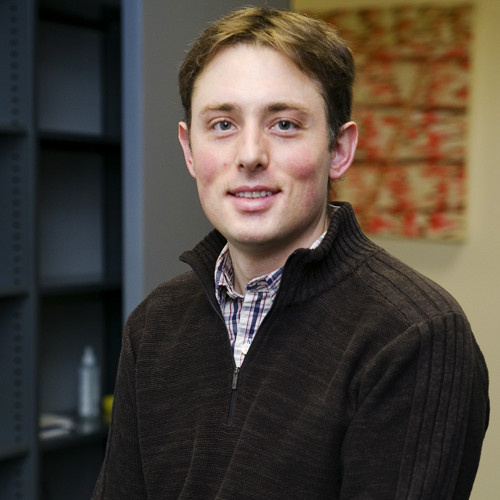
John Paisley is an Associate Professor in the Department of Electrical Engineering at Columbia University, where he is also a member of the Data Science Institute. His research interests include Bayesian models and inference, with applications to machine learning problems. Before joining Columbia in 2013, he was a postdoctoral researcher in the computer science departments at Princeton University and UC Berkeley. He received the BSE and PhD degrees in Electrical and Computer Engineering from Duke University in 2004 and 2010, respectively.
11:55 - 12:25
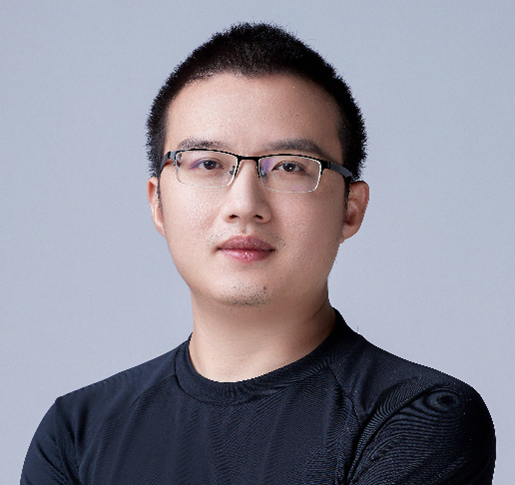
In the large model era, vectors—serving as metadata for large models—are being applied across various aspects of these models, such as Retrieval-Augmented Generation (RAG), sparse attention, and KV caching. Our team has taken vectors as the entry point to develop a research framework centered on the principle: “Model Capability = Memory Capability × Inference Capability.” In this talk, I will introduce two research work: AlayaLite and AlayaJet, and briefly discuss the key challenges in building AlayaDB, the data foundation for the large model era.
Dr. Bo Tang is a tenured associate professor at Southern University of Science and
Technology. His research interests are big data/large model systems. He always
published at top-tier conference and journals (e.g., SIGMOD, PVLDB, TODS). His
research outputs have been widely used in leading IT companies (e.g.,
Microsoft, Tencent, and Huawei). He won Huawei Spark Award (3 times). He is
awarded SIGMOD China Rising Star at 2021 and sponsored by NSFC excellent young
researcher grant at 2024.
12:25 - 12:55
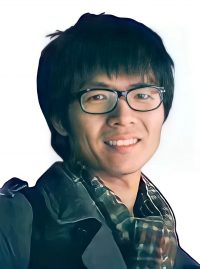
Leye Wang is an assistant professor at Key Lab of High Confidence Software Technologies, School of Computer Science, Peking University, China. His research interests include ubiquitous computing, mobile crowdsensing, and urban computing. Wang received a Ph.D. in computer science from the Institut Telecom SudParis and University Paris 6, France, in 2016, and was a postdoc researcher with Hong Kong University of Science and Technology. He has published 50+ papers and received 1500+ citations according to Google Scholar.
12:55 - 14:00
- Lunch Break Session
Keynote
14:00 - 14:55

As innovation cycles accelerate across industries, organizations struggle to track emerging technologies, detect weak signals, and map fast-evolving knowledge landscapes. Traditional technology-monitoring pipelines rely on manual curation or classical machine-learning models that scale poorly when confronted with millions of documents and tens of thousands of possible technology tags. In this talk, we present a scalable framework for technology monitoring powered by eXtreme Multi-Label Classification (XMLC). We describe a number of technological advances we have published in terms of explainable text classification, automated taxonomy update, and text classification leveraging very large and structured sets of labels.
Philippe Cudre-Mauroux is a Full Professor and the Director of the eXascale Infolab at the University of Fribourg in Switzerland. He received his Ph.D. from the Swiss Federal Institute of Technology EPFL, where he won both the Doctorate Award and the EPFL Press Mention in 2007. Before joining the University of Fribourg, he worked on information management infrastructures at IBM Watson (NY), Microsoft Research Asia and Silicon Valley, and MIT. He recently won the Verisign Internet Infrastructures Award, a Swiss National Center in Research award, a Google Faculty Research Award, as well as a 2 million Euro grant from the European Research Council. His research interests are in next-generation, Big Data management infrastructures for non-relational data and AI.
14:55 - 15:25

The use of Kernel Density Visualization (KDV) has become widespread in several disciplines, including geography, crime science, transportation science, and ecology, for analyzing geospatial data. However, the growing scale of massive geospatial data has rendered many commonly used software tools unable of generating high-resolution KDVs, leading to concerns about the inefficiency of KDV. This talk aims to raise awareness among database researchers about this important, emerging, database-related, and interdisciplinary topic. In this talk, I will first discuss the background and the state-of-the-art method of KDV. Then, I will further discuss the state-of-the-art method of the key variant of KDV, which is spatiotemporal kernel density visualization (STKDV). After that, I will discuss some new software packages, which are based on these state-of-the-art methods, for supporting KDV and STKDV. Lastly, I will outline some future directions for this topic.
Tsz Nam Chan (Edison) is currently a Distinguished Professor in the database group of the Big Data Institute in Shenzhen University (SZU). He is a data engineering researcher (for handling the efficiency issues in big data settings). He published several research papers in prestigious conferences and journals (CCF: A, CSRankings, and top ranking in Google scholar) in both database (data engineering) and data mining areas, including SIGMOD, VLDB, ICDE, SIGKDD, and TKDE. Prior to joining the SZU, he was a Research Assistant Professor in the Hong Kong Baptist University from Sep 2020 to Aug 2023 and a postdoctoral researcher in The University of Hong Kong from Sep 2018 to Aug 2020. He received the PhD degree in computing and the BEng degree in electronic and information engineering from The Hong Kong Polytechnic University in 2019 and 2014, respectively. He is an IEEE senior member and an ACM member.
15:25 - 16:00
- Coffee Break Session
16:00 - 16:30
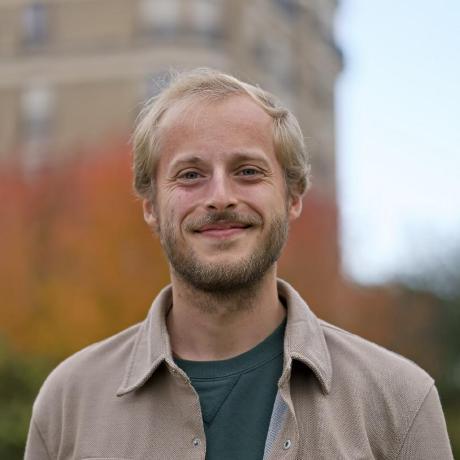
Anomaly detection is an essential problem in data analytics with applications in many domains. In recent years, there has been an increasing interest in anomaly detection for time series. In this talk, we take a holistic view of anomaly detection in time series, starting with the core definitions and taxonomies of time series and anomaly types, and proceeding to a general overview of the anomaly detection methods proposed by different communities in the literature. We will then conclude with Ensembling and Model Selection for time-series anomaly detection, discussing strategies for automatically selecting the appropriate techniques for a given time series.
I am a researcher at Inria, member of the VALDA project-team, which is a joint team between Inria Paris, École Normale Supérieure, and CNRS. Before that, I was a Postdoctoral researcher at Ecole Normale Supérieure (ENS) Paris Saclay (Centre Borelli) in the team of Prof. Laurent Oudre. I completed my Ph.D. at the University of Paris and EDF R&D, working with Prof. Themis Palpanas, Emmanuel Remy, and Mohammed Meftah. During my Ph.D., I did an internship at the University of Chicago under the supervision of Prof. Michael J. Franklin and Prof. John Paparrizos. Before starting my Ph.D., I worked as a research engineer at the computer science lab of Ecole Polytechnique in Prof. Michalis Vazirgiannis’s team. My research interest lies in the intersections between: Massive time series analytics and management systems. Unsupervised and supervised anomaly detection methods for large time series. Machine learning for time series analytics.
16:30 - 17:00

Defu Lian is a professor from University of Science and Technology of China. His main research interest lies in data mining and deep learning. He has published more than 160 papers at prestigious conferences and journals, and received a best paper runner-up in APWeb 2016, best paper candidate in WWW 2021 and best paper award in WISE 2022. He developed a highly-modularized recommender system (RecStudio) and a learned vector retrieval library (LibVQ). He received the National Science Fund for Excellent Young Scholars.
17:00 - 17:30

Longbiao CHEN is an associate professor with Department of Computer Science, Xiamen University, China. He obtained his Ph.D. degree in computer science from Sorbonne University, France in 2018 and Zhejiang University, China in 2016, respectively. Before joining Xiamen University, he worked as a research assistant in Institut Mines-Télécom, France. His research interests include Ubiquitous Computing, Mobile Crowdsensing, Urban Computing, and Big Data Analytics. Dr. Chen has published over 50 papers in top-tier journals and conferences, including ACM UbiComp, IEEE Trans. Mobile Computing, and IEEE Trans. Intelligent Transportation Systems. He received two UbiComp Honorable Mention Awards in 2015 and 2016, respectively. He is a senior member of China Computer Federation (CCF), technical committee member of ACM SIGSPATIAL China Chapter and CCF Ubiquitous Computing Committee. He serves as the PC members of several conferences including IJCAI and UIC.